



Most Malaysians probably do not think of their finances as particularly complicated until they count how many places their money is kept.
Your salary might go into one bank, your emergency savings into another, while your credit card comes from somewhere else.
For EPF, well, you check that separately through KWSP, while an e-wallet or two handles much of your everyday spending.

Getting a full picture of your finances can already mean opening several apps.
Malaysia’s Open Finance push could make some of that easier.
A new Brankas whitepaper argues that the framework could allow banks and fintechs to build services using financial information held across different institutions, provided the customer agrees to share it.
Bank Negara Malaysia (BNM) laid out the regulatory foundations in its Open Finance Exposure Draft in November 2025, proposing a framework for permissioned sharing of customer information between financial providers.
Most people will probably care less about the APIs behind it than whether managing their money becomes easier.
You Could See More of Your Money in One Place
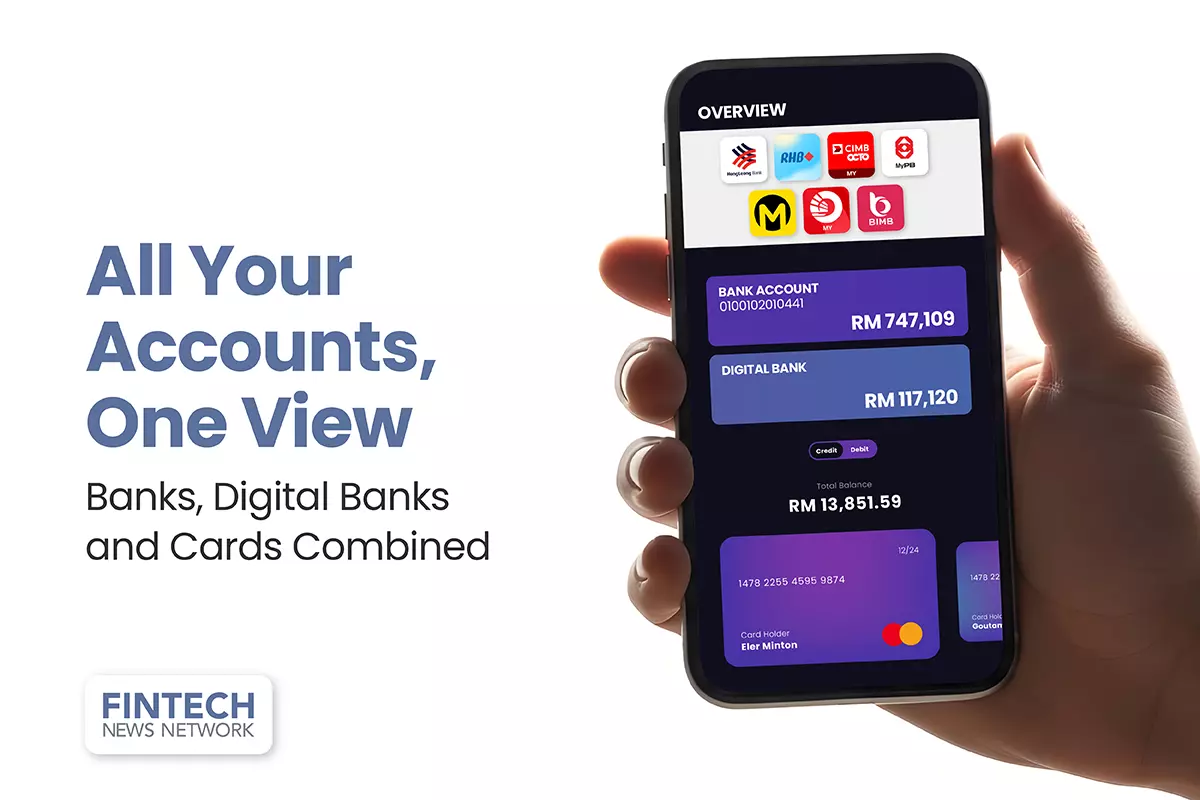
Say your salary goes into one bank, some savings are kept in a digital bank and your credit card is with another provider.
Checking how much money you actually have means looking at each separately.
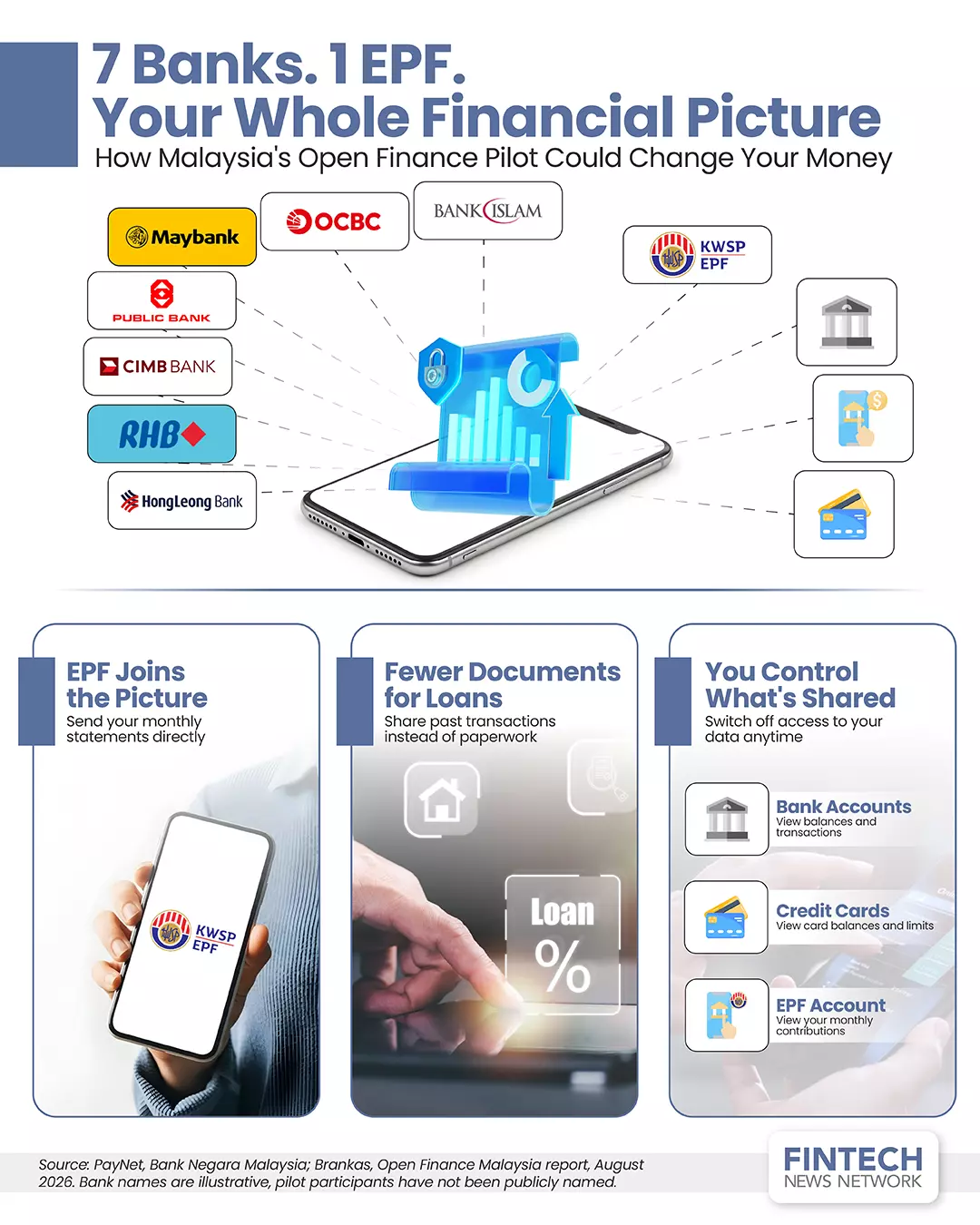
Open Finance could allow a participating financial provider’s app to retrieve information from other institutions, with your permission, and give you a wider view of your finances.
BNM has specifically identified a single account view and personal financial management as potential Open Finance use cases.
Its Exposure Draft proposes that mandated financial providers eventually allow customers to display information from accounts held with other providers through their banking apps.
Under the current proposal, the single-account-view requirement would begin from 1 January 2028, or when an institution’s relevant Open Finance obligations begin if that comes later.
Brankas sees room to build further on that data. Its report describes services that could combine balances and transaction histories, categorise spending and provide financial insights using information from more than one account.
Someone checking their finances a week before payday might eventually see how much has gone towards groceries or petrol across the accounts they have connected, rather than checking each statement separately.
Malaysians already generate plenty of financial activity for such tools to work with.
According to BNM’s 2025 payment data, the average Malaysian made 538 e-payments in 2025, up 25% from 432 the year before. Malaysia recorded 18.4 billion e-payment transactions during the year.
PayNet separately processed 8.44 billion digital transactions in 2025, covering everyday activity including retail payments, transport and person-to-person transfers.
Malaysians are already used to moving money digitally.
Open Finance deals with another problem: much of the information behind those financial relationships remains split between different providers.
EPF Could Make the View More Useful
EPF gives Malaysia’s Open Finance plans another dimension.
Most budgeting tools are good at showing what happened to your money last month. Working out whether today’s spending and saving habits leave you with enough for retirement is harder.
EPF has been involved in PayNet’s Open Finance work since its early technical development.
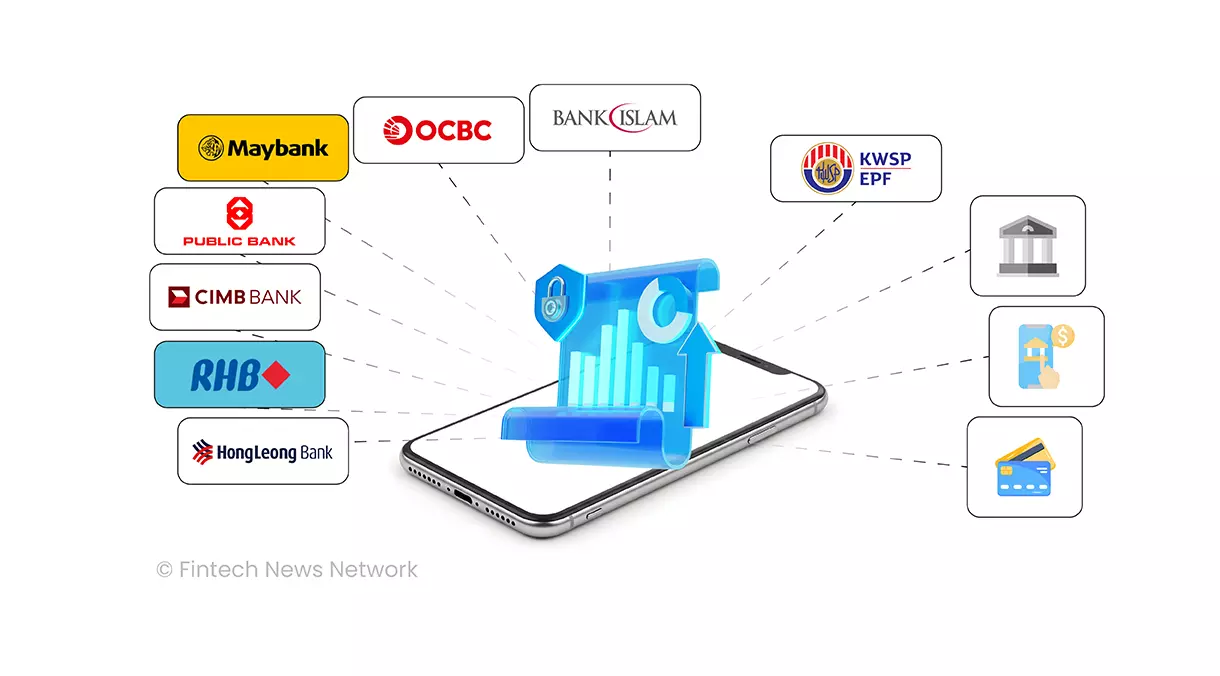
When we first covered Malaysia’s Open Finance plans in September 2025, PayNet was working with seven banks and EPF on the technical foundations for the system.
PayNet’s Open Finance developer portal now describes the platform as supporting consented data from banks, financial institutions and pension providers such as EPF.
Brankas argues that EPF information could allow personal financial management tools to cover longer-term savings and retirement planning alongside day-to-day finances.
There is a sizeable savings gap to work with.
As of 31 May 2026, 3.04 million active Malaysian EPF members aged 18 to 60, or 38.3% of 7.94 million members in that group, had achieved the Basic Savings target for their respective age, according to Deputy Finance Minister Liew Chin Tong.
Around 61.7% remained below their age-based target.
EPF’s revised Retirement Income Adequacy framework sets Basic Savings at RM390,000 by age 60.
The transition from the previous RM240,000 level is being phased in over five years, reaching the new benchmark in 2030.
Putting EPF information alongside someone’s bank accounts will not fix the savings gap, although it may help people understand their position earlier.
Someone building a house deposit, for example, may focus on cash savings today while paying less attention to retirement.
A financial tool with permission to see both could give that customer a more complete picture of how those goals interact.
Loan Applications Could Require Less Document Hunting
Open Finance may become more noticeable when someone needs financing.
Applying for a loan can still involve downloading statements, uploading supporting documents and proving income to a bank that knows little about the money you keep elsewhere.
When we first reported on the Open Finance rollout last September, PayNet described a model where customers could instruct one institution to transmit information directly to another instead of emailing PDFs or moving documents around manually.
BNM has since put that concept into its Exposure Draft.
The proposal includes interfaces that would allow customer information to be requested in a standardised, machine-readable format rather than relying on manual uploads or email.
Prescribed transaction information would cover the most recent 12 months, including transaction dates, descriptions and values, together with the current outstanding account balance.
Brankas argues that lenders could use this information to verify income and cash flow, assess affordability and reduce manual document submission.
A salaried employee may mainly notice the convenience. Someone without a conventional monthly salary could see a bigger difference.
Banks Still Need Your Permission
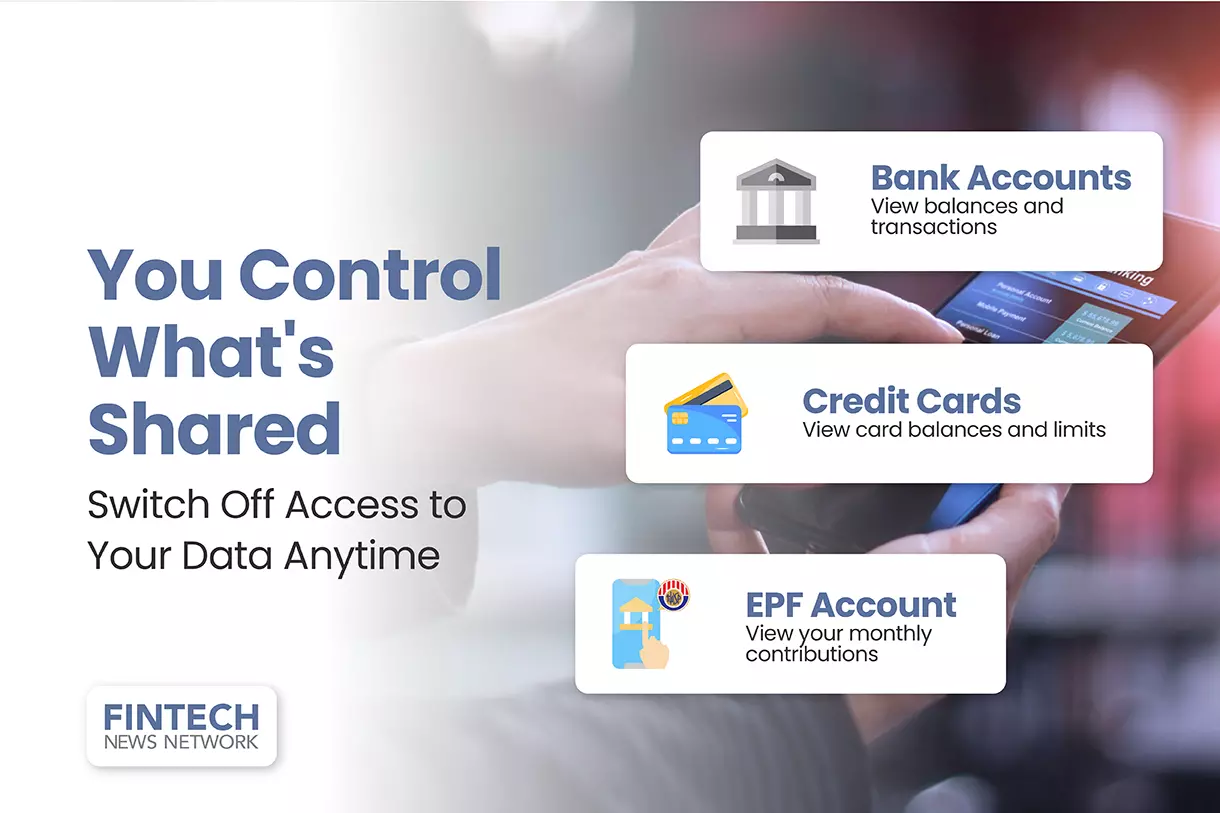
Seeing more of someone’s financial life naturally raises questions about privacy, hence why BNM requires customers to give consent before providers can share their financial data.
Its November 2025 Exposure Draft says consent must be specific, voluntary and explicitly given.
Customers must be told who will receive their information, why it is being shared and what information will be disclosed.
Participating providers would need digital consent dashboards where customers can review permissions and revoke access.
Recurring access for uses such as personal financial management would last no longer than six months unless the customer renews it.
When BNM released the Exposure Draft last November, we looked at how those consent safeguards would work, including how customers could manage and withdraw permissions.
Linking an account should therefore not give another institution permanent access to your financial life. Customers would be able to see what they have agreed to share and withdraw that permission.
What Malaysians May Actually Notice
Malaysia’s Open Finance discussion looked much more technical a year ago.
Early coverage focused on PayNet’s infrastructure, the participating institutions and how consent would work. The consumer uses are easier to picture now.
Someone may eventually check fewer places to understand their finances. Another customer could get a better view of everyday spending alongside retirement savings.
Loan applicants may spend less time gathering statements, while freelancers could have another way to demonstrate regular income.
Timing still needs some care.
BNM’s Exposure Draft sets 1 January 2027 as the proposed start date for obligations on the largest banks, although BNM has yet to publish the final framework.
The central bank’s Governor Datuk Seri Abdul Rasheed Ghaffour said in July 2026 that BNM, PayNet and the financial industry were developing the supporting infrastructure ahead of a phased rollout from 2027.
Banks are now moving from policy discussions to figuring out what they can actually build with it.
In a recent Fintech Fireside Asia discussion, RHB Chief Digital Officer Cyrene Kong and Boost Bank CEO Fozia Amanulla discussed how far the pilot has come and what the shift to open APIs could mean for their institutions.
Few Malaysians are going to care which API carried their account balance between two institutions.
They will care if they can open one app and understand more of their finances, or apply for a loan without hunting down the same statements all over again.
If the rollout delivers, the difference may show up in the moments Malaysians already find frustrating.
Featured image: Edited by Fintech News Philippines based on images by hafizaltalib79 and funtap via Magnific.
Infographic images: Edited by Fintech News Philippines based on images by rawpixel-com, abuuhurera, ipopba, wahyu-t, xvector and wahyu-t via Magnific.
