




Investment scams and phone calls drove losses as scammers outsmarted three in four Malaysians in 2024.
A new survey shows that despite strong confidence in spotting scams, many still fell victim, losing an average of RM4,844.70 each.
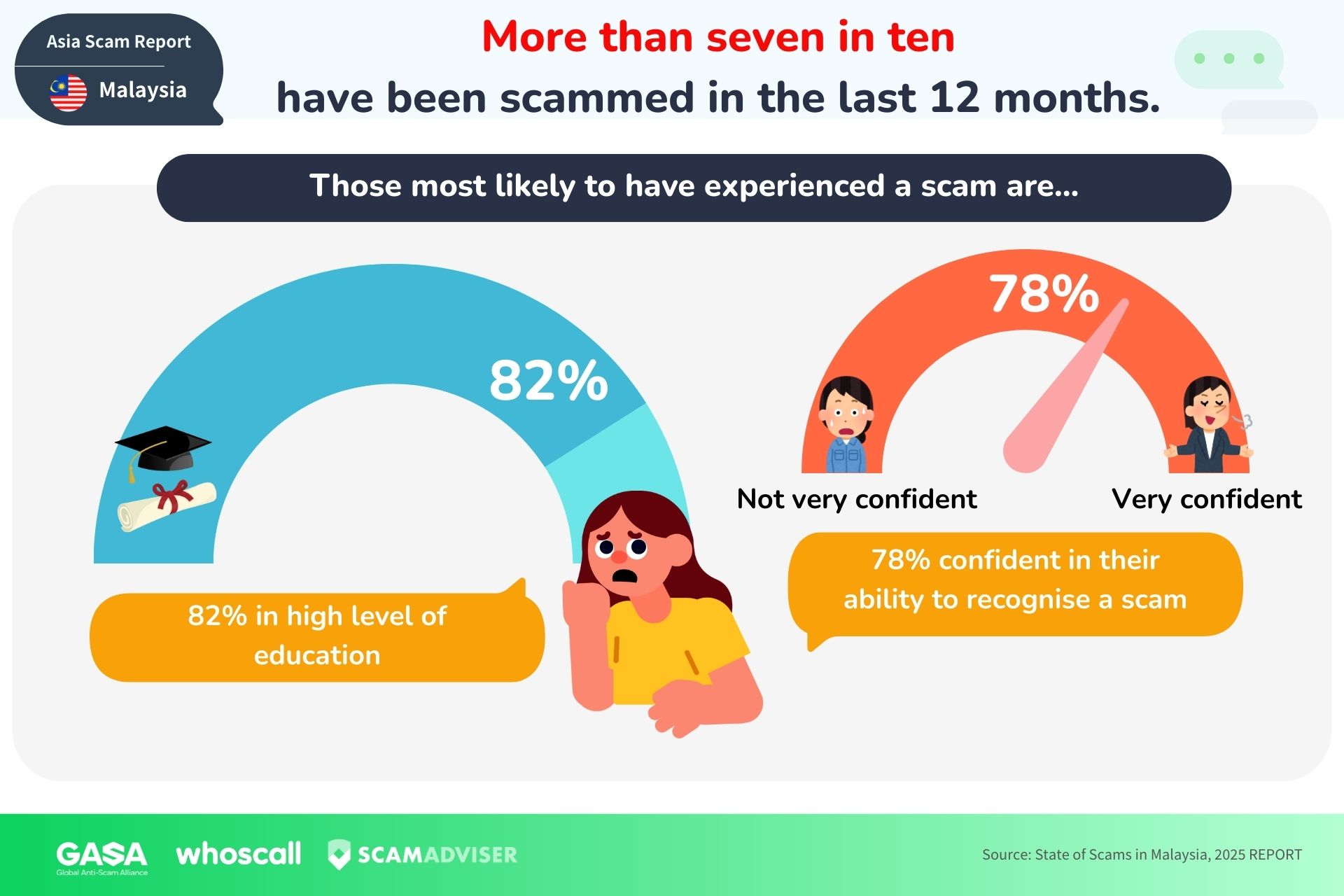
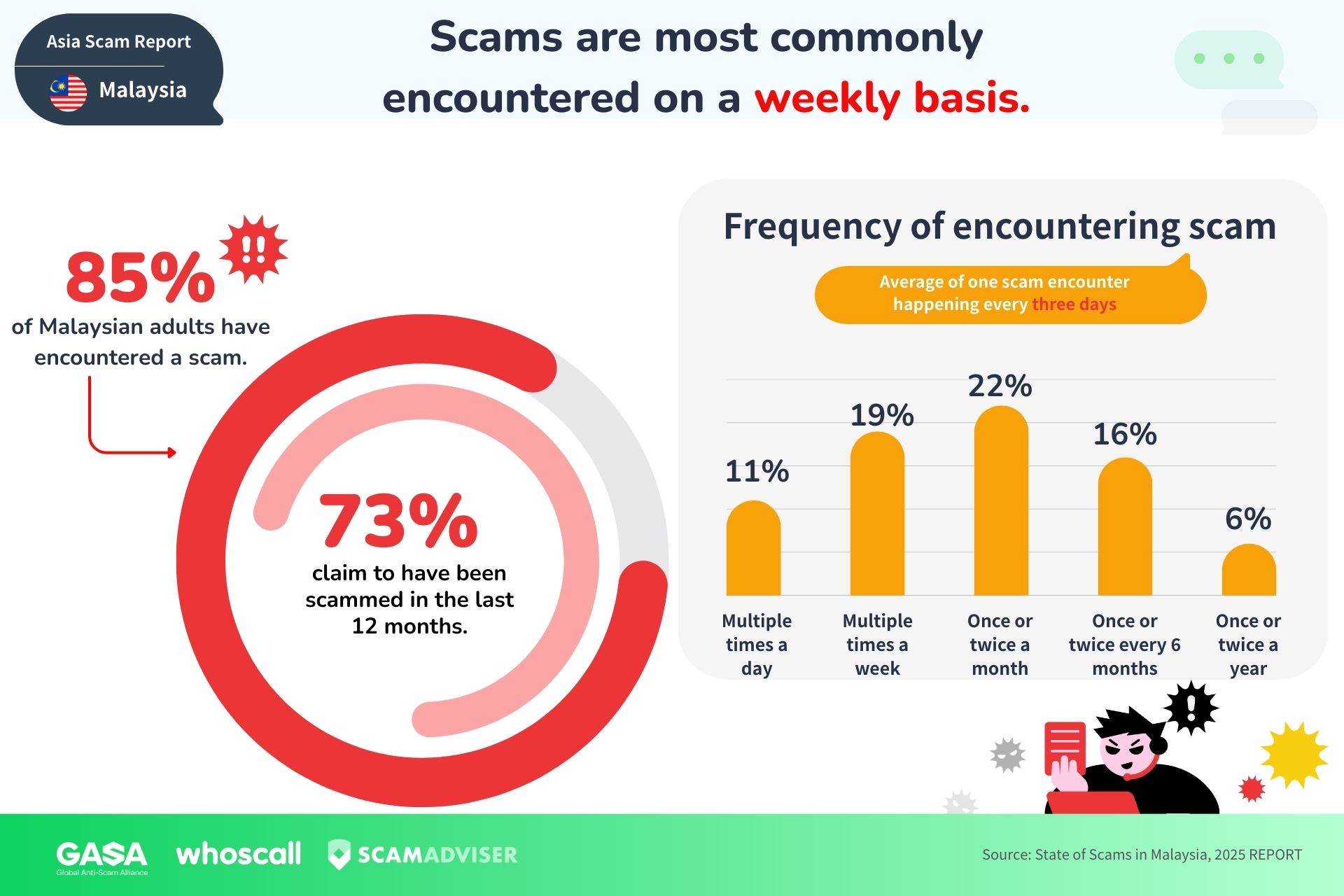
The 2025 State of Scams in Malaysia report, published by Gogolook and the Global Anti-Scam Alliance (GASA), found that 85% of adults had encountered a scam, with 73% falling victim.
Three-quarters of Malaysian adults said they were confident in spotting scams, and 14% even claimed they could “always” identify one, yet the results highlight a clear gap between awareness and actual protection.
Scams also hit groups that might consider themselves least vulnerable.
Of those most likely to have been scammed, 82% were highly educated and 78% were millennials.
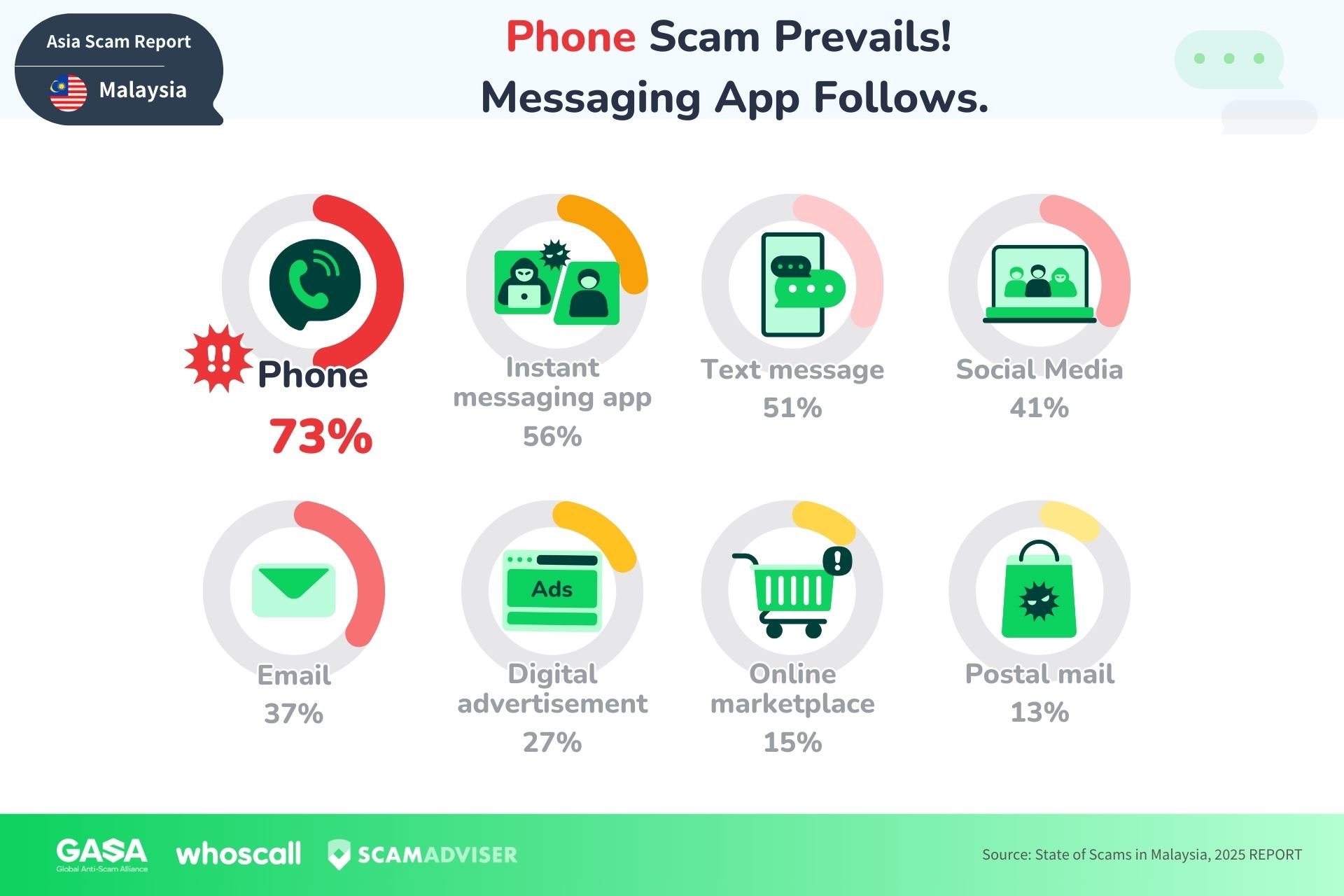
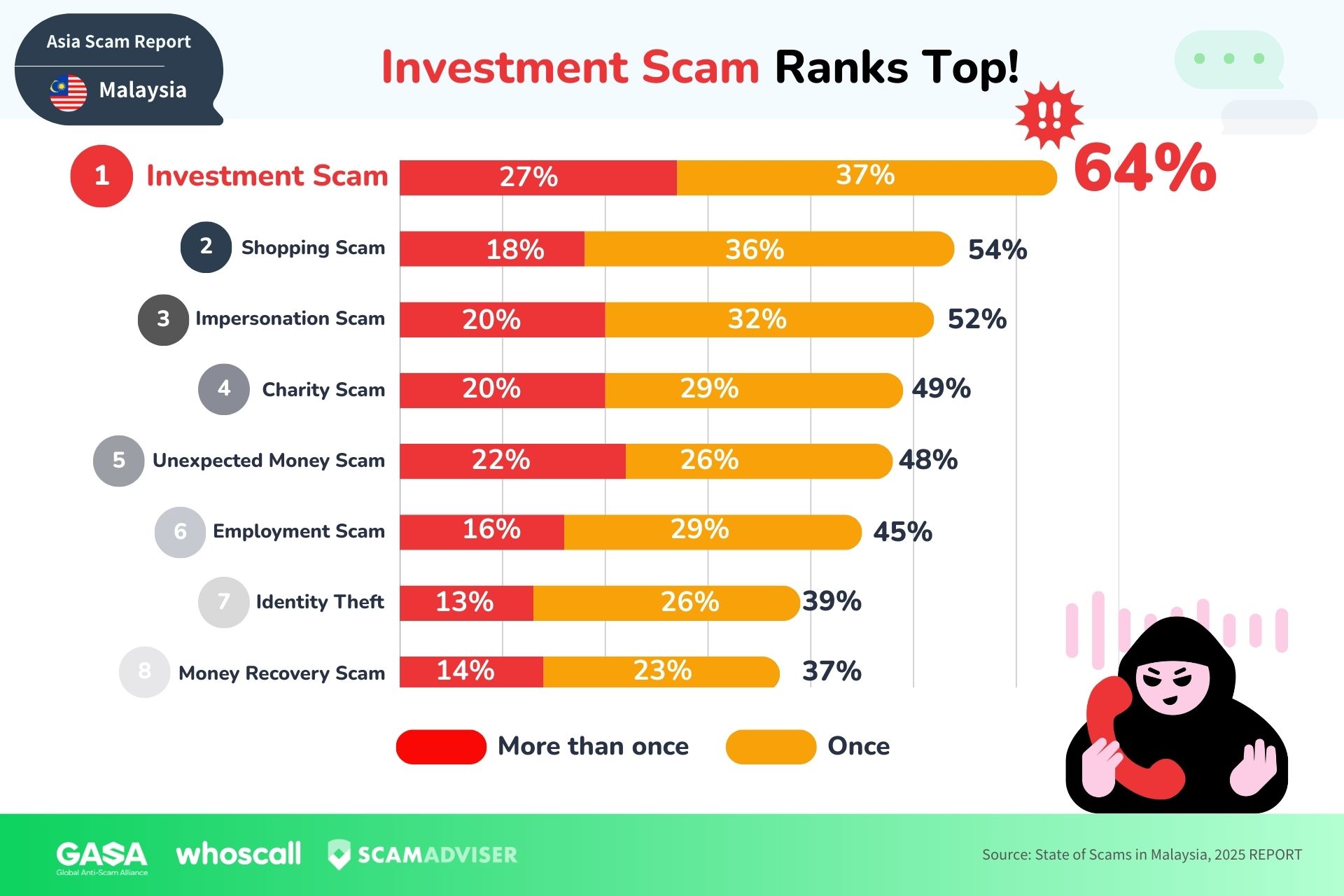
Investment scams emerged as the most common, while phone calls remained the leading channel used by scammers.
However, scams delivered through messaging apps are on the rise, now accounting for 56% of attempts.
WhatsApp, Telegram and Facebook were the most frequently used platforms.
Children were not spared, with 21% of parents reporting that their child aged between 7 and 17 had been scammed at least once.
Reporting remains inconsistent: 23% of victims did not file a report, with 35% unsure of where to do so and 34% believing it would not make a difference.
Respondents placed the greatest responsibility for scam protection on the government, but consumer protection organisations were seen as most effective.
They were rated highest for scam education (65%), ease of reporting (64%) and victim support (58%).
The findings are based on a nationally representative online survey of 1,000 Malaysian adults conducted between 26 February and 14 March 2025.

“Even though 94% of Malaysian respondents say they take steps to check if an offer is legitimate, many are relying on less effective methods like checking grammar errors or whether a company is active on social media. What this tells us is that awareness alone is not enough. We need better tools, smarter prevention, and platforms that support early detection and action.
That is where Whoscall comes in. As the only anti-scam app in Malaysia officially approved by the Royal Malaysia Police (PDRM), Whoscall uses AI technology not only to detect suspicious calls and messages but also to analyse scam links and images, including those captured via screenshots. Tech solutions like this are critical in closing the preparedness gap,”
said Manwoo Joo, Chief Operating Officer of Gogolook, the company behind Whoscall.
Featured image: Edited by Fintech News Malaysia, based on image by rawpixel.com via Freepik
