Get the hottest Fintech Malaysia News once a month in your Inbox
Consumers today hold high benchmarks for their digital experiences. Every app, platform, and service they touch resets the baseline for what “good” looks like, and that standard follows them into every interaction, banking included.
Islamic banks are not immune to this shift. With Islamic banking now contributing 48% of total Islamic financing, the segment has quickly outgrown its origins as a niche serving a value-driven segment.
It is now mainstream, with customers that expect what they receive everywhere else: seamless onboarding, instant transactions, intuitive interfaces, and digital tools that match or exceed what they use elsewhere.
But one underlying question always remains. How do you bring Shariah banking into the modern world without compromising the very principles that define it?
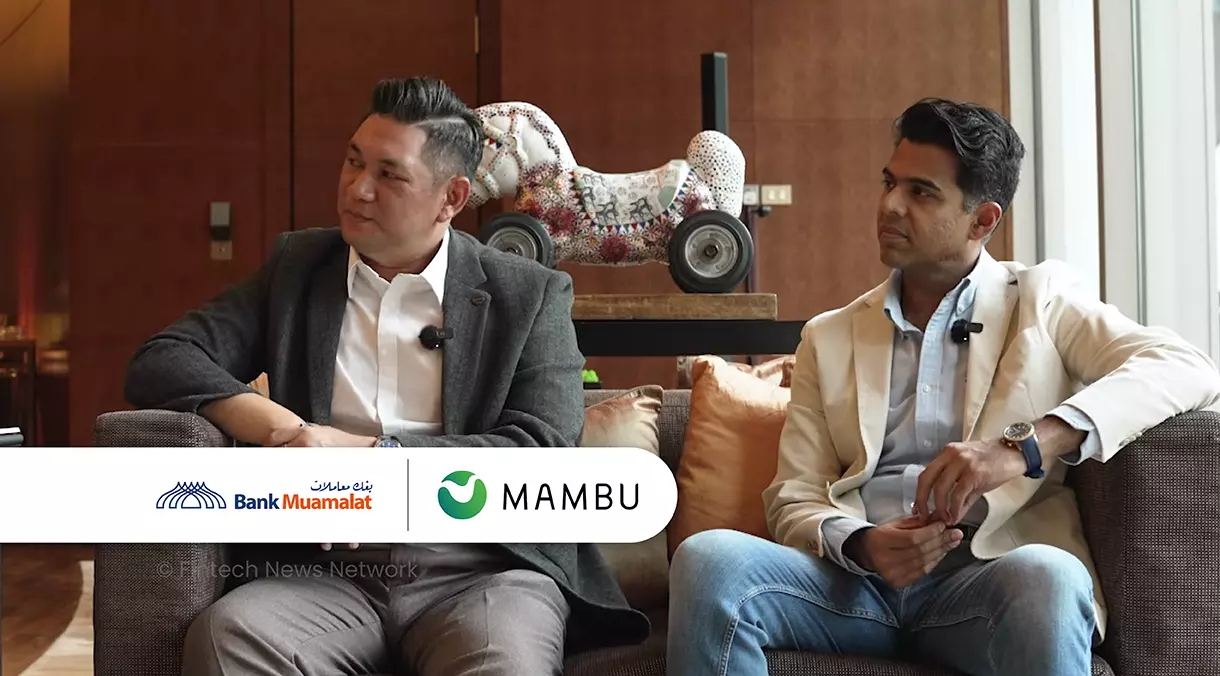
Hazrizal Hassan, Head of Digital Banking at Bank Muamalat Malaysia and Chirag Amla, Principal Solutions Architect for APAC at Mambu, sat with Fintech News Network’s Chief Editor Vincent Fong to explore this question for the Islamic bank and more.
ATLAS by Bank Muamalat is a Strategic Bet
Bank Muamalat’s response to bringing Shariah into modernity began taking shape in 2022, when the bank introduced RISE26+, its five-year strategy.
“The RISE26+ strategy anchors on three pillars: value creation for the customers, introducing new avenues for growth, and also building a high-performance team. It’s about the best return on equity, return on assets, and a significant reduction in our cost-to-income ratio,” Hazrizal shared.
ATLAS, the bank’s digital proposition, was conceived under this. It was treated as a new growth engine platform designed to test how Islamic banking could be delivered through an advanced technology model.
While Bank Muamalat could have attempted a full transformation of the entire bank from the get-go, Hazrizal said such an approach would have moved more slowly.
Hazrizal Hassan
“If we decided four years ago that there is going to be a big bang to convert the entire bank to a cloud-based model, composable architecture, I bet you we’ll be sitting in a committee meeting every day. Things would not have moved.”
Bank Muamalat’s ATLAS gave the bank a way to build small, fast, and separately, then migrate the mothership across once the new stack had proven itself.
“The grand plan is to use the technology for the entire bank. ATLAS is sort of like the R&D part to make sure that things are going to work, that we can migrate into in the next two to three years.”
6 Months In, ATLAS Is Scoring Big
Within six months of launching to the public, Atlas was onboarding new customers at a rate equivalent to 70 of Bank Muamalat’s physical branches.
61% of those customers were new to the bank. 85% were aged 45 and below, while Muslim customers sat at around 70%, broadly in line with the wider Malaysian market. But to the team’s surprise, there was a good share of non-Muslim customers signing up too.
“I think it goes to the kind of rewards and perks that they actually get on ATLAS,” Hazrizal added.
Beyond the financial basics, ATLAS is built for daily Muslim life: Prayer Times, Daily Doa, a Kiblat Finder, Zakat and Qurban services woven into the same interface as the banking ones.
The unit economics are tracking too. Hazrizal noted that customer acquisition cost benchmarks globally sit at around US$100, and Bank Muamalat is aiming for a Malaysian-market equivalent of roughly RM100 per customer as Atlas matures.
“Efficiency translates into faster onboarding, acquisition of the customer, and cheaper cost to serve.”
9 Months to Build the Right Model
ATLAS was built from the ground up alongside Mambu, Backbase, and Google Cloud, and brought to market in nine months. Pulling that off in under a year required a departure from how incumbent banks typically build. Hazrizal described it as a mindset reset before anything else.
The technology itself was not the hard part, as cloud-based models and composable stacks are well understood. Hazrizal said that the friction sat elsewhere, in reconciling a modern build with regulatory expectations around an older operating model.
“We ‘baked’ the compliance and security into ATLAS. It is not bolted, which means you just take the thought and connect it. At the end of the day, we need a frictionless customer experience, and that is where we see what are the steps we can actually reduce.”
That meant interrogating every requirement in the onboarding flow, questioning whether a 20-step process could be compressed into five, and bringing risk, compliance, and Shariah scholars into the same sprint conversations as the developers building ATLAS.
How Regulatory Conversation Mambu Helped Facilitate
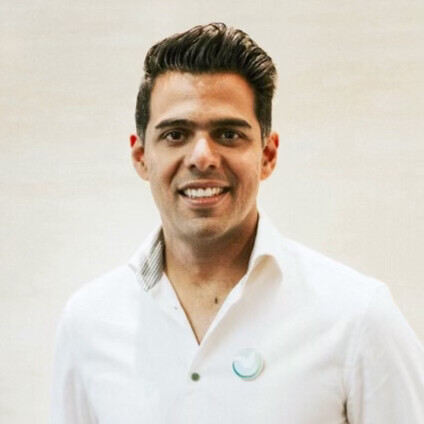
On Mambu‘s end, the platform piece to the puzzle was straightforward. Chirag explained,
Chirag Amla
“If you sign with Mambu, the next day, the platform is available. It is a proven, regulated platform.”
The harder part was the regulatory conversation around running core banking on the cloud, which was not something a vendor could resolve on its own.
Mambu’s role was to support Bank Muamalat in facilitating that dialogue with Bank Negara Malaysia, walking the regulator through how data is secured in transit and at rest, and how customer protections hold up under a cloud-based model.
“It wasn’t that we went to the regulator and said ‘we are the best core banking on the cloud.’ We instead said that we are going to have the core on the cloud for Bank Muamalat, and these are the ways we secure the data,” Chirag shared.
Chirag described the process as long and demanding, with late-night calls involving the Mambu team, Bank Muamalat, and Google Cloud.
The second challenge was one Chirag watched play out at larger banks attempting similar builds, where the bank itself is not fully ready to operate as a digital bank.
“I’ve worked with a lot of bigger banks who want to launch innovative products, and when they start doing it, their scope is small. Then scope creep becomes big, because some head of department says, I want this. Another head of department says, I want this. What ATLAS did really well was they ring-fenced the entire thing.”
That ring-fencing gave the digital banking team clear authority over what made it into the MVP and what stayed out, with the decision anchored on risk and compliance input rather than internal lobbying.
Mambu’s Starting Point is the Bank’s Pain Point
Picking a core banking partner tends to be a long, painful exercise where vendors lead with their platform pitch while banks lead with their Request for Proposal. Chirag described Mambu’s approach as deliberately different, starting with what the bank is challenged with.
“We call it discovery. We spend time with our customers. It’s not about us trying to sell the platform to them, saying we are Mambu. We really try to understand what our customers, or soon-to-be customers’ pain points are.”
Some banks are struggling with workflow efficiency. Others have data scattered across systems that were never meant to talk to each other. And many are locked into legacy vendors that quote costly bills and 12-month timelines for a single new repayment feature.
The pain point shapes the prescription, and Chirag was candid that the ‘speedboat’ model Bank Muamalat chose is not a universal answer.
For banks looking to test a new revenue model while running their existing book, a speedboat works because it pairs the speed and agility of modern technology with the risk and compliance scaffolding of the mothership.
But for banks that modernised their core years ago and are now stuck with a platform that has fallen behind the market, the answer often looks different.
“There is no one size fits all. We are always working with the bank to actually figure out what it is that you want to achieve, and then we would suggest, would a dual-core or a multi-core strategy work for you, or is a speedboat approach a better option in your case.”
The Next Shape of Islamic Banking is Invisible
For Hazrizal, the next phase of ATLAS is about making Islamic banking feel personal, relevant, and embedded into how customers already live. This means looking beyond banking for inspiration.
“We don’t just look at banking apps,” he said. “We go beyond the financial services industry, and we take a look at the e-commerce side, the coffee app, the ones that sell ice cream. Why do people engage? So we try to take on, how do we actually offer personalisation to this particular customer?”
The point is that customers no longer judge a banking app only against other banking apps. They judge it against every digital experience that’s caused them to expect speed, relevance, ease, and rewards that feel tailored to them.
Chirag sees the same shift playing out across the industry.
“Islamic finance is going through a bit of a revolution right now where people are taking ownership of their money. Islamic finance exists, but can we revamp it into the modern era? I have the same principles, but can I have it at my convenience?”
Faith and convenience are no longer separate trade-offs. For Islamic banking to keep growing, Shariah principles need to sit beneath the digital experience as the foundation, while the interface delivers the personalisation and relevance customers now expect as the norm.
Watch Hazrizal Hassan and Chirag Amla discuss the ATLAS Bank Muamalat build, Mambu’s discovery approach, and what comes next for Islamic banking modernisation in Malaysia.