

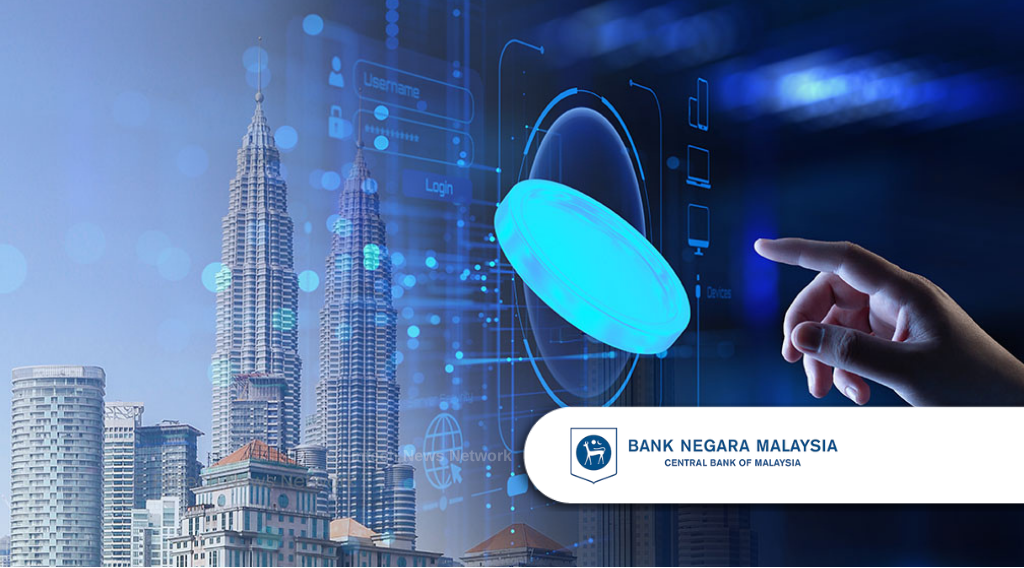
Bank Negara Malaysia (BNM) has released a Discussion Paper on Asset Tokenisation in the Malaysian Financial Sector to gather industry feedback on how digital representations of real-world assets could transform financial services.
The central bank defines tokenisation as the process of converting physical or traditional financial assets into digital tokens that can be issued, traded, and settled on programmable platforms.
These tokens enable features such as atomic settlement, where transactions are completed instantly once conditions are met; composability, which allows seamless interaction between financial instruments; and programmability, which automates processes through smart contracts.


BNM believes these features could deliver measurable improvements in transparency, efficiency, and accessibility across Malaysia’s financial system.
By embedding logic directly into digital assets, financial institutions could streamline settlement, reduce operational friction, and create more inclusive financing solutions.
The discussion paper emphasises that the initiative remains exploratory.
Rather than introducing new regulations, BNM seeks feedback from financial institutions, fintech firms, and technology partners to identify practical use cases that bring tangible economic value.
Across the region, other regulators are testing similar ideas.
Singapore’s Project Guardian now includes more than 40 financial institutions experimenting with tokenised asset pilots, while Hong Kong’s Project Ensemble is developing wholesale settlement infrastructure to support tokenised transactions.
Malaysia’s discussion paper takes a similar exploratory approach, focusing on collaboration and feedback before any policy decisions are made.
The Rationale Behind BNM’s Tokenisation Push
BNM’s interest in tokenisation stems from its potential to modernise financial infrastructure and make markets more efficient.
Tokenisation enables financial assets to exist as programmable units that can settle automatically once agreed conditions are met.
In traditional markets, settlement can take days, and counterparties must hold large buffers to manage risk. Tokenisation could shorten this cycle dramatically, lowering settlement risk and freeing up liquidity.
At the same time, tokenisation offers traceability, as transactions are recorded on distributed ledgers that are secure and auditable. This creates new ways to manage risk while supporting greater transparency and trust in the financial system.
Exploring Tokenisation’s Economic Potential
BNM’s discussion paper identifies a range of potential applications for tokenisation across Malaysia’s financial ecosystem.
The goal is not to experiment for its own sake but to test where tokenisation can deliver real economic value and solve structural inefficiencies.
The paper outlines a clear framework for identifying viable use cases based on three guiding principles: value proposition, technology-solution fit, and feasibility within current capabilities.

Below are BNM’s initial exploration highlights for key areas of tokenisation:
Supply Chain Financing
SMEs form 97% of businesses, contribute 39.5% of GDP, and employ nearly half of Malaysia’s workforce. Yet they face a financing gap that exceeds USD21.5 billion (about RM101 billion).
In traditional supply chains, payments flow sequentially from anchor buyers to multiple tiers of suppliers, making it difficult for smaller firms to leverage large buyers’ creditworthiness.

Tokenisation can change this by allowing large firms to issue tokenised invoice receivables representing future payments to suppliers.
These digital tokens carry the anchor buyer’s credit risk and verifiable transaction data. SMEs can then use these tokens as collateral for financing, transfer them downstream as invoice payables, or hold them to maturity.
This model could encourage lenders and investors to extend more affordable financing to SMEs, improving liquidity and financial inclusion across supply chains.

Treasury and Liquidity Management
Traditional financial markets rely on sequential settlement processes that require pre-funded liquidity buffers to mitigate settlement risk. Trades often take hours or even days to settle, tying up capital that could otherwise be deployed for investment or lending.

Tokenisation can introduce atomic settlement, where transactions are finalised instantly once both payment and asset transfer conditions are met. This reduces the need for pre-funding and frees up liquidity.
Institutions could use programmable smart contracts to perform Delivery-versus-Payment (DvP) and Payment-versus-Payment (PvP) settlements in real time, cutting operational complexity and reducing intraday liquidity mismatches.
By adopting this model, financial institutions could manage capital more efficiently and potentially reduce reliance on costly short-term funding facilities.

Islamic Finance
Malaysia’s RM2.4 trillion Islamic Capital Market, which makes up 63.7% of the total market, presents significant opportunities for tokenisation.
In Islamic finance, tokenisation can ensure simultaneous exchanges of assets and funds in compliance with Shariah principles.
Smart contracts can automate structures such as murabahah (cost-plus financing), ijarah (leasing), and waʿd (unilateral promises).
Tokenised systems could also enhance secondary market activity for instruments such as sukuk and investment accounts, improving liquidity and reducing operational risk.
BNM sees this as a natural extension of Malaysia’s established leadership in Islamic finance innovation.
Sustainability and Climate Finance
Malaysia’s financial institutions have pledged over RM240 billion in ESG-linked financing up to 2027, and SRI sukuk issuance reached RM11.9 billion in 2024.
BNM highlights that tokenisation could strengthen the integrity of green and sustainable finance. Tokenised instruments can record non-financial data directly on programmable platforms.
For example, a sustainability-linked sukuk could automatically adjust its profit rate based on verified environmental metrics. Similarly, a green bond could release funds only when pre-defined sustainability milestones are met.
By making impact data verifiable and immutable, tokenisation can reduce greenwashing and increase investor confidence in Malaysia’s growing ESG market.
Programmable Payment Tokens
Another area of exploration is programmable payment tokens (PPTs). These tokens embed conditions within their programming logic, allowing automatic execution of payments once specific criteria are satisfied.
For instance, government disbursements or social aid could be released automatically upon verification of eligibility. In commercial contexts, programmable tokens could streamline escrow payments, milestone-based contracts, or supplier settlements, enhancing efficiency and transparency.
This programmable structure offers more flexibility than current provider-based systems and can significantly reduce administrative costs.
24/7 Trade and Cross-Border Payments
BNM is also exploring the use of tokenisation to enable real-time, round-the-clock trade and cross-border payments.
By representing trade receivables and settlement obligations as digital tokens, businesses could complete transactions instantly, even beyond traditional banking hours. This would improve liquidity for exporters and importers and help reduce settlement delays that often affect smaller trading firms.
As cross-border trade becomes more digitalised, tokenised payments could complement global initiatives like Project Dunbar and Project Guardian, positioning Malaysia within a wider regional network of interoperable settlement systems.
While the current focus is on financial instruments, BNM acknowledges future potential in real-world asset tokenisation, such as property deeds or machinery.
These applications, however, would require deeper legal reforms and industry readiness before implementation.
In the short term, BNM aims to build confidence through pilots that tokenise financial assets already well-understood within Malaysia’s regulatory framework.
BNM’s Framework for a Safe Tokenisation Ecosystem
The discussion paper sets out six key considerations that will guide how Malaysia approaches tokenisation.

BNM limits participation to licensed and registered financial institutions to uphold accountability and governance.
Access to tokenised financial services will also take place in permissioned environments with strong Know-Your-Customer and anti-money laundering safeguards.
Findings from the Bank for International Settlements support BNM’s cautious stance, showing that stablecoins account for about 63% of illicit cryptocurrency transactions.
The data underscores the need to maintain clear boundaries between regulated finance and open crypto markets.
BNM will allow flexibility in how tokenisation models evolve, ranging from hybrid systems that combine on-chain and off-chain elements to fully digital implementations as infrastructure matures.
Early efforts will focus on familiar financial assets such as bonds, loans, and deposits before expanding to more complex instruments.
The central bank is also open to exploring MYR-denominated tokenised deposits and stablecoins, as long as they maintain the “singleness of money”.
This means that all forms of money remain interchangeable at par and fully backed by regulated institutions.
In terms of infrastructure, BNM adopts a technology-neutral stance, emphasising resilience, security, and interoperability rather than prescribing any specific distributed ledger platform.
Co-Creating the Future of Tokenised Finance
BNM’s approach to developing tokenisation is based on co-creation and industry experimentation. The Digital Asset Innovation Hub (DAIH) will serve as a test environment where financial institutions, fintech firms, regulators, and technology partners can collaborate on proof-of-concept trials.
Complementing this is the Asset Tokenisation Industry Working Group (IWG), which will coordinate policy dialogue and identify potential regulatory gaps.

The roadmap spans 2025 to 2027, moving from conceptual exploration to live pilots. Insights from these pilots will guide future regulations and help determine how tokenisation fits within Malaysia’s existing legal and supervisory frameworks.
BNM has invited public feedback on the discussion paper, with responses due by 1 March 2026 via tokenisation@bnm.gov.my.
Preparing for Malaysia’s Digital Finance Feature
BNM’s exploration of asset tokenisation represents an important step in preparing Malaysia’s financial system for the digital future.
If the concept proves viable, it could help narrow the RM101 billion SME financing gap, enhance the resilience of the RM2.4 trillion Islamic financial sector, and support more than RM240 billion in ESG-linked investments.
More broadly, it reflects a shift toward financial innovation that is practical, inclusive, and grounded in real economic value.
By engaging the industry early, BNM is ensuring that Malaysia’s path toward tokenised finance evolves in a way that balances opportunity with trust, paving the way for a more connected and efficient financial ecosystem.
Featured image: Edited by Fintech News Malaysia based on images by igorono, 3Dsss and EyeEm via Freepik.
