insureKU Wants to Fix the Most Broken Part of Insurance
After more than two decades in insurance, Shadhana Sekaran, CEO and co-founder of InsureKU, identified claims as one of the industry’s most persistent pain points. Today, she is working to fix it with support from the PayNet Fintech Hub.
Get the hottest Fintech Malaysia News once a month in your Inbox
“Insurance should be an embedded product in one’s lifestyle, not a luxury item.”
It is a simple statement, but it challenges decades of industry orthodoxy.
Insurance has long been sold as a necessity wrapped in complexity, a product people buy with hesitation and often understand only when something goes wrong.
For Shadhana Sekaran, the Co-Founder and CEO ofinsureKU Digital Sdn Bhd (a subsidiary of Censof Holdings), that disconnect between policy and reality was impossible to ignore.
For Shadhana, who grew up in a family rooted in insurance since the 1970s and spent years in the industry herself, that disconnect was impossible to ignore.
She repeatedly saw the same pattern as most of her customers grew confused at the point of purchase and frustrated when it came time to make a claim.
Industry data suggests these frustrations are far from isolated.
For Shadhana, these patterns only reinforced the need for a simpler, more transparent approach to insurance.
Her response was not another brokerage model or digital sales channel.
Instead, insureKU was built as a platform that rethinks how people discover, compare, purchase, and claim insurance in a digital economy that increasingly demands clarity and immediacy.
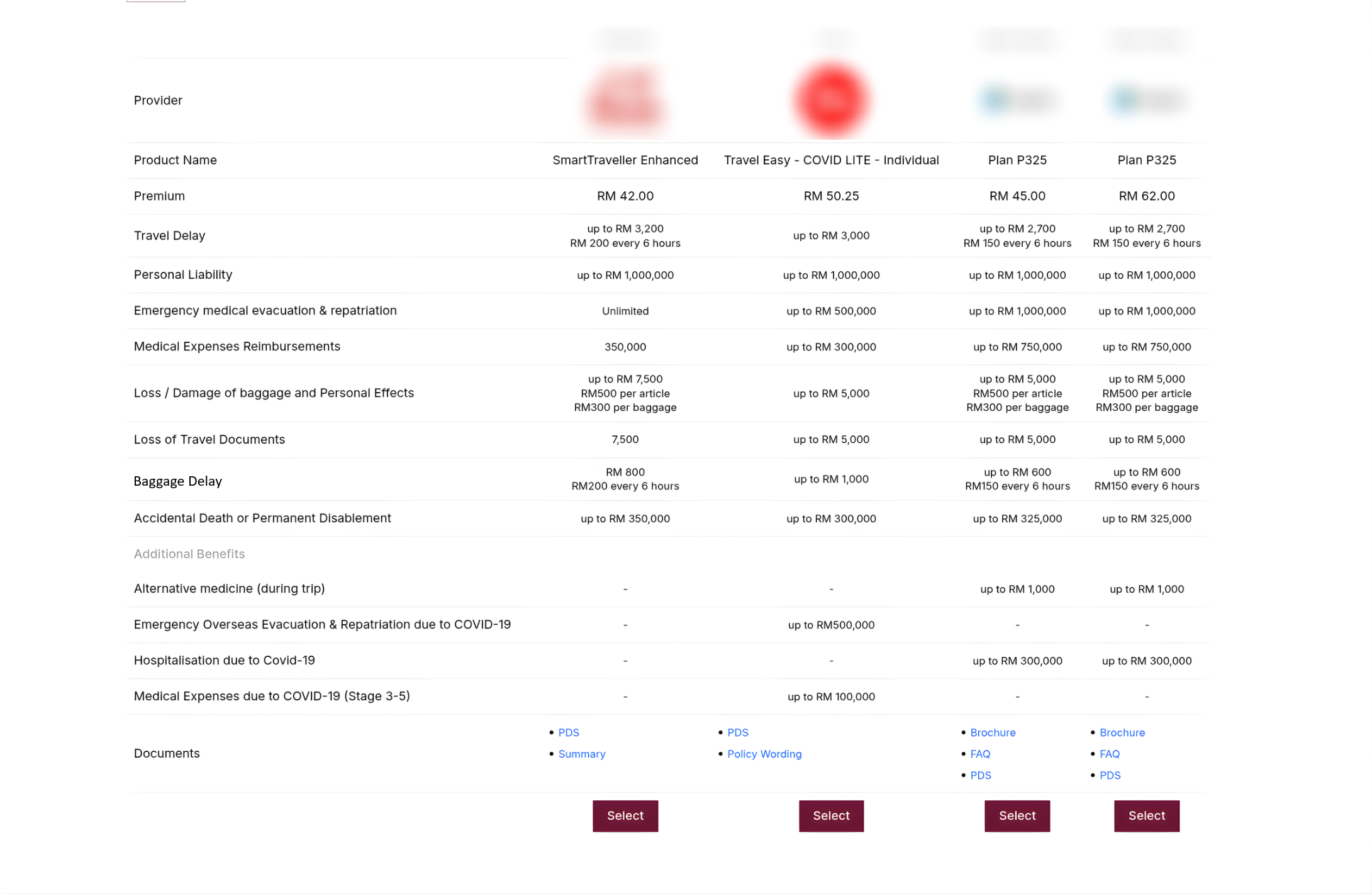
The insureKU platform allows users to conduct a transparent, side-by-side comparison of travel insurance plans from leading providers, making it easy to select the right coverage for their journey.
Today, insureKU sits at the intersection of insurance, AI, and fintech infrastructure, supported by the PayNet Fintech Hub.
Making Insurance Understandable, Comparable, and Simple
Traditional insurance distribution often places the burden of understanding on consumers.
Policies are dense, product features vary across insurers, and comparisons typically require multiple touchpoints with agents or websites.
insureKU’s core platform addresses these frictions by aggregating insurer pricing in real time and presenting product benefits in structured comparison tables, enabling users to evaluate multiple insurers side by side.
It also simplifies technical terminology that often alienates first-time buyers, enabling more informed decisions without intermediaries.
The platform’s business model mirrors familiar insurance distribution structures but delivers them through a fully digital experience.
insureKU primarily generates revenue through distribution commissions paid by insurers when policies are successfully purchased through the platform.
At the same time, the model creates value for insurers by lowering customer acquisition costs, expanding their digital reach, and providing data-driven insights into consumer behaviour and product demand.
“insureKU’s idea is to simplify the decision-making process when it comes to the consumers, and of course, the post sales as well,” Shadhana explained.
Banks and insurers can use platforms like insureKU as a digital distribution layer that meets changing consumer expectations while lowering acquisition and servicing costs while users experience a familiar online shopping‑style journey.
Using AI to Fix the Troublesome Claims Experience
Claims represent the defining moment of truth in insurance.
Delays, missing documents, and manual checks have historically eroded customer trust.
insureKU’s response is an AI-driven claims engine designed to automate verification and accelerate insurer decision-making.
“We are building an AI engine where we are focusing on the claims process,” Shadhana pointed out.
It verifies uploaded documents, flags potential tampering, and pulls out key data like incident details and claim amounts.
By doing this before insurers even see the claim, it reduces back-and-forth and speeds up processing. Automation also helps catch fraud that human reviewers might miss.
The scale of fraud across the industry continues to drive the urgency to improve claims processing.
To address these challenges, insureKU is embedding AI-driven verification and detection directly into the claims workflow, enabling the platform to identify inconsistencies before submissions reach insurers.
The system verifies documents, flags potential anomalies, and reduces reliance on manual checks, allowing insurers to process claims more efficiently while strengthening fraud controls.
Through this approach, insureKU is targeting a 65% reduction in operational costs, a 75% increase in claims efficiency, and a 40% improvement in fraud prevention.
From Building Alone to Building with an Ecosystem
Like many founders, Shadhana initially approached product development as a solitary challenge, assembling capabilities internally and navigating partnerships independently.
That mindset shifted after insureKU joined the PayNet Fintech Hub, a fintech-focused ecosystem enabling fintechs, banks, and partners to test, learn, and scale together, providing technical partnership, a coworking space, shared services, and access to the PayNet Credit Fund.
The impact was immediately visible in the development of insureKU’s AI-driven claims infrastructure.
Building the technology independently would likely have taken at least 18 months, but support from the PayNet Credit Fund enabled the team to deploy the solution within six months, allowing the platform to scale far more quickly than originally anticipated.
“I noticed that it is no longer building things on your own. It is more on collaboration, orchestrating the ecosystem together with your peers,” she said.
Within the Hub, insureKU collaborated with Unbraided AI on document verification technology, significantly reducing development timelines.
Instead of spending months building in-house, they could focus on integration and user experience.
The collaboration integrated Unbraided AI’s Kenal eKYD and TrustFlow solutions into insureKU’s claims pipeline, enabling automated document verification and integrity checks that flag potential tampering before a claim reaches insurers.
The system has also helped reduce claims processing times by as much as 90%.
Jonah Lau
“Our work with insureKU shows what happens when you pair deep document intelligence with real insurance workflows,” said Jonah Lau, CEO of Unbraided AI.
Here, we can see that fintech innovation is no longer about isolation.
It’s about connecting ecosystems, testing ideas quickly, and launching products that the market actually wants.
Shadhana, together with Jonah Lau, Chief Executive Officer of Unbraided AI at the PayNet Fintech Hub TGI Friday event.
Thinking Bigger After Imperial College London
Participation in the PayNet x Imperial College London CATALYST programme marked another inflection point for insureKU.
The 10-week programme exposed Malaysian fintech founders to global frameworks, academic mentors, and international peers, challenging assumptions about market size and ambition.
During the programme, Shadhana realised that insureKU’s model could go beyond Malaysia.
A mentor asked:
“You do know that they don’t have this even globally, right?”
That question challenged her to think bigger than ASEAN and consider how insureKU could scale globally.
It reframed insureKU’s outlook from a domestic aggregator to a potential global insurance ecosystem enabler.
“That was a game changer … and we felt big, like we can be a global brand,” she uttered.
Shadhana stands with fellow Malaysian fintech leaders during their week-long immersion at Imperial College London as part of the 10-week PayNet x Imperial CATALYST programme.
Reaching Consumers Who Feel Left Out of Insurance
Shadhana pointed out that insurance penetration remains uneven across Malaysia. It is particularly seen among gig workers and lower-income groups who often feel excluded from traditional advisory channels.
insureKU’s platform addresses this gap by allowing users to browse products based on affordability and personal needs without social pressure.
Early feedback from users reflects that shift in experience.
One of the first-time insurance buyer via the platform, Dr. Anusha, shared her experience directly with Shadhana after purchasing through the platform.
“Shadhana, the insureKU app is mighty fantastic and the price is reasonable. I booked using it and it was super easy,” she said.
This approach broadens access to financial protection and aligns with Malaysia’s financial inclusion agenda.
Embedding Insurance into the Digital Lifestyle
Looking ahead, Shadhana envisions insurance as a seamless component of everyday digital experiences rather than a standalone transaction.
Achieving that means integrating insurers, fintech platforms, and digital ecosystems seamlessly.
Like what she said earlier in the article, she believes that insurance should be an embedded product in one’s lifestyle, not a luxury item.
As Malaysia continues to modernise its financial infrastructure, platforms that prioritise clarity, collaboration, and inclusion will define the next phase of financial services innovation.
Insurance is meant to protect people at their most vulnerable moments.
The real breakthrough will be when no one feels lost when it matters most.
For those looking to be part of this transformation, the PayNet Fintech Hub provides the infrastructure and ecosystem to turn ideas into scalable solutions.
Join them today.
This article is part of an ongoing series spotlighting Malaysian fintechs building the future of finance through the PayNet Fintech Hub. Discover the Hub and more fintech startup journeys from IIMMPACT, Cashku, Janjilah, Swipey, Kapitani, Blox, and Moby.
Featured image: Edited by Fintech News Malaysia based on an image by user16357019 via Freepik.