



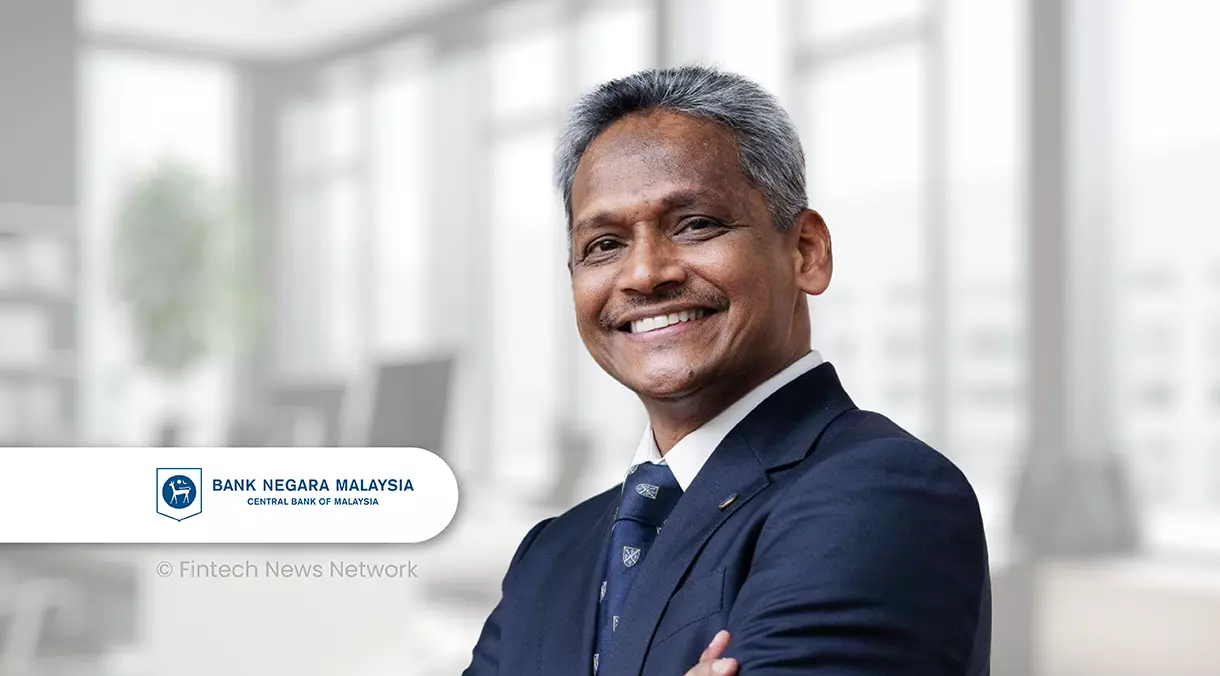
Bank Negara Malaysia (BNM) says more than 70% of Malaysian financial service providers have implemented at least one AI application, raising fresh questions about governance and accountability.
BNM Governor Abdul Rasheed Ghaffour told the inaugural AICB Nexus Conference in Kuala Lumpur that AI is already being used in financial services to detect fraud, assess credit and insurance risks, strengthen compliance, manage risk and improve customer service.
He noted that adoption is accelerating across Malaysia’s financial sector, based on industry responses to BNM’s Discussion Paper on Artificial Intelligence in the Malaysian Financial Sector.

So far, much of the focus has been on internal gains such as efficiency, productivity and risk management.

Abdul Rasheed urged financial institutions to move beyond institution-level use cases and apply AI to wider industry problems such as scams, fraud and cyber threats.
He pointed to collaboration between BNM, the Royal Malaysia Police, financial institutions, PayNet and other partners to strengthen safeguards, share intelligence and protect customers.
“Trust is not built by one institution, but by an ecosystem working as one,”
he said.
Governance Moves to the Boardroom
Abdul Rasheed framed AI as a governance issue, not just a technology matter.
As models become more complex, financial institutions must be able to explain outcomes, challenge decisions and remain accountable for how AI is used.
Boards and senior management should treat AI as a core agenda item, tied to clear business outcomes, measurable value and a defined risk appetite.
He warned that responsibility cannot be delegated to an algorithm, even as machines play a larger role in supporting decisions.
Risk, compliance and internal audit teams will also need to play a bigger role as financial systems become more complex and autonomous.
Their focus should go beyond whether controls exist to whether institutions can explain AI-driven outcomes and stand behind them.
Preparing the Workforce
Abdul Rasheed also called for greater investment in people as AI reshapes job roles, workflows and the nature of work.
He highlighted AICB’s Future Skills Framework, which is aimed at helping banking professionals build AI literacy, ethical judgment and governance capabilities.
BNM’s approach is to encourage innovation while upholding trust and ensuring that progress benefits society.
This includes early industry engagement, clearer regulatory expectations, responsible experimentation and shared infrastructure.
Open Finance and Tokenisation
The central bank is also advancing its Open Finance framework for secure, consent-based data sharing, with phased implementation from 2027.
Supporting infrastructure is being developed with PayNet and the industry.
BNM’s asset tokenisation roadmap is also moving into pilots through the Digital Assets Innovation Hub.
Abdul Rasheed stressed that these initiatives are tools rather than end goals.
Their value will depend on whether they improve lives, strengthen resilience and deepen trust.
BNM is also developing the Financial Sector Blueprint 2027 to 2030 with the industry, government and other stakeholders.
“The future of finance will not be defined by how fast and sophisticated our technology is. It will be defined by whether that technology strengthens trust, broadens opportunity and serves society well,”
he said.
Featured image: Edited by Fintech News Malaysia, based on image by Frolopiaton Palm via Magnific
