




Talk of ringgit stablecoins may sound promising, but the average Malaysian already has DuitNow on their phone.
If money can already move instantly at almost any hour, what exactly is a ringgit stablecoin meant to fix?
Vincent Fong, Chief Editor of Fintech News Network, put that question to the panel at the Luno Institutional Digital Asset Conference Kuala Lumpur 2026 (LIDAC26), asking what purpose local-currency stablecoins would serve and whether consumers even needed one.
Milind Sanghavi, Founder and CEO of Xweave, was not convinced domestic payments were the answer.
“If you have a really good real-time payment system, I’m not sure you need anything else.”
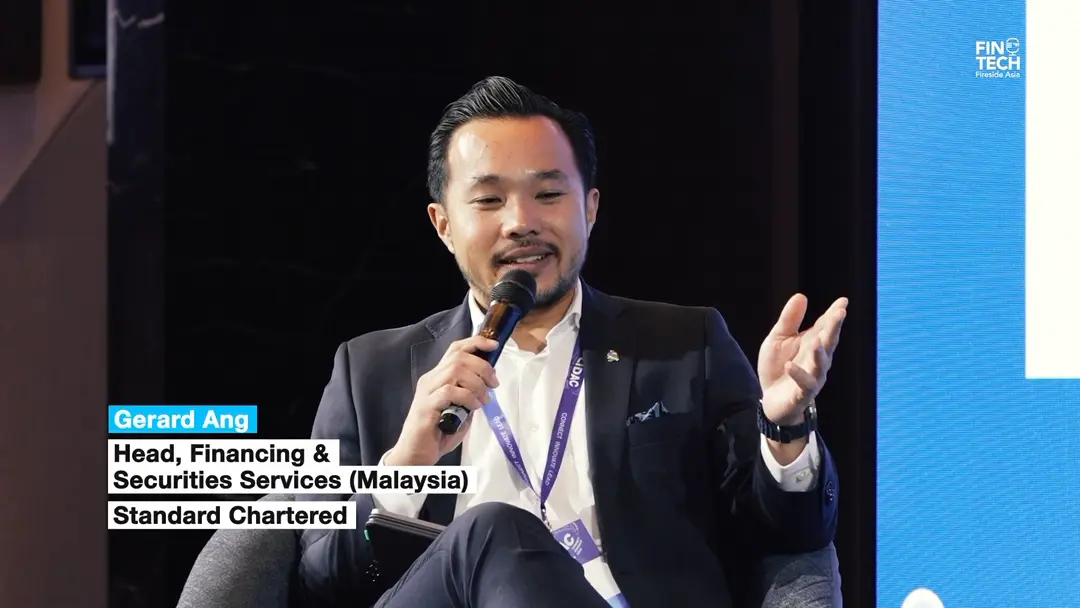
Gerard Ang, Head, Financing & Securities Services (Malaysia) at Standard Chartered, brought the point back to Malaysia.
DuitNow already lets someone make a transfer on a Sunday night at 3am and see it reflected in their banking app.
Eddy Christian Ng, Expansion Lead at Tether, came to much the same conclusion.

With the panel broadly aligned on retail payments, the discussion moved to the problems that existing payment rails still leave businesses to deal with.
Wholesale Payments Still Have Friction
Bank Negara Malaysia is already testing some of those use cases through its Digital Asset Innovation Hub.
Standard Chartered Bank Malaysia and Capital A are working on ringgit stablecoins for B2B settlement. Maybank is testing tokenised deposits for payments.
CIMB too is joining the wagon where it is currently looking at their use in settling tokenised securities.
Gerard used the Standard Chartered and Capital A pilot to show why institutions may see value where consumers do not.
The payment system involved in the use case operates within set hours, so the pilot is examining whether organisations can settle payments as they happen instead of waiting to net them later.
Gerard said gross settlement could make value transfer between organisations more efficient. It could also reduce the liquidity companies need to keep aside and the bank credit they rely on while waiting for settlement.
Cross-border payments expose another set of problems, and stablecoins already have a stronger case there. Most of the stablecoins doing that work today, however, are pegged to the US dollar.
Milind said Xweave first encountered the problem through remittances, where payment providers outside the largest banks may need to prefund accounts in different markets before they can serve customers.
Money can remain idle in those accounts, tying up capital, while providers may have little certainty over when a payment will arrive or what it will eventually cost.
Similar issues later surfaced in Xweave’s work with corporate treasury and supplier payments.
Milind gave the example of importers using letters of credit or credit lines and then waiting for funds to reach their overseas suppliers before they can ship the goods.
Stablecoins can shorten that wait because the value reaches the other side much faster.
Gerard also saw cross-border payments as one of the more convincing use cases.
He pointed to the cost and speed of correspondent banking as reasons businesses may look for another way to settle payments across markets.
Cross-border payments make the case for stablecoins easier to see, but they leave Malaysia with a more specific question.
Why does the money need to be denominated in ringgit?
Ringgit Has a Different Problem to Solve
Dollar stablecoins already have an advantage when money moves across borders because their markets are much deeper.
Xweave has worked with local stablecoins in Indonesia and Singapore, and Milind said their liquidity remains far behind what is available through Tether and Circle.
“Local stables are not liquid enough today for real cross-border use cases.”
Gerard focused on what ringgit stablecoins could mean for Malaysian trade, not on matching dollar stablecoins on liquidity.
Malaysian manufacturers can produce goods locally and export them overseas even when buyers settle the transaction in US dollars.
Stablecoins could make it easier for that company to receive the proceeds and keep them in dollars, giving it less reason to convert the money back into ringgit.
Gerard argued that more of the value generated through Malaysian production could then remain in dollars despite the underlying economic activity taking place here.
A usable ringgit-denominated form of digital money would at least give businesses another place to hold and move that value.
Milind expected monetary-policy concerns to keep local currencies on regulators’ agendas even if commercial demand remains limited for now.
Eddy, meanwhile, has been looking at whether local stablecoins can become more useful by linking markets such as Indonesia, Australia and Taiwan, with USDT potentially helping move value between them.
Maintaining liquidity between currencies can still cost around 20 to 30 basis points, according to Eddy, which makes those connections expensive.
Gerard traced the problem back to whether businesses had enough reason to use the currency in the first place.
More tokenised trade and financial assets could create that utility.
Companies settling those transactions may eventually need a ringgit-denominated form of money. Tokenised deposits could provide it, and banks are already testing how they might work.
Tokenised Deposits Offer Another Route
Eddy framed the choice around where the money needs to move. He said tokenised deposits work better in closed-loop arrangements, while transactions on public chains give stablecoins a clearer role.
Because tokenised deposits can earn interest like conventional bank deposits, Gerard saw yield as another point of difference.
The comparison prompted Vincent to ask why a corporate treasurer would choose a stablecoin instead.
Milind clarified that his treasury example focused on moving money across borders, not holding cash for a return.
On the one hand, businesses care about whether a payment arrives quickly and what it costs. On the other, compliance requirements can determine whether they can use the service at all.
Cross-bank transfers add another complication.
USDT and USDC already benefit from exchanges that connect participants and provide deep liquidity.
Ringgit stablecoins do not yet have the same market depth, so they cannot assume the same interoperability advantage will develop automatically.
Milind said stablecoins remain too expensive for some of the jobs they were designed to do.
He added that larger B2B transactions could eventually favour tokenised deposits if the economics work better.
BNM is testing both forms through its 2026 pilots, and the central bank expects the findings to inform greater regulatory clarity on ringgit stablecoins and tokenised deposits by the end of the year.
Milind’s broader point was that the use case should determine which form of money businesses adopt.

Malaysia’s pilots will give businesses a chance to show which option they are actually willing to use in real transactions.
The full LIDAC26 conversation covers how the panel sees stablecoins fitting into Malaysia’s payments market.
Watch it here:
Featured image: Edited by Fintech News Malaysia based on images by Luno via LIDAC26.
