Kapitani Is Turning Farm Data Into Malaysia’s Digital Agri-Fintech Credit Layer
Nazrul and Iskandar are building the data layer banks have been waiting for, with support from the PayNet Fintech Hub to help bring it to market at scale.
Get the hottest Fintech Malaysia News once a month in your Inbox
Malaysia still imports roughly 60% of its food. The agriculture minister confirmed this in a written Dewan Negara reply, citing factors like limited farmland, an ageing farmer workforce, and rising production costs that make local produce increasingly uncompetitive.
The farmers who could change this bleak picture, sadly, have the system working against them on both fronts.
Payment terms of 79 to 90 days from hypermarkets, for example, mean farmers miss planting windows, struggle to pay workers, and face suppliers chasing settlements, creating a cash flow gap that compounds each season.
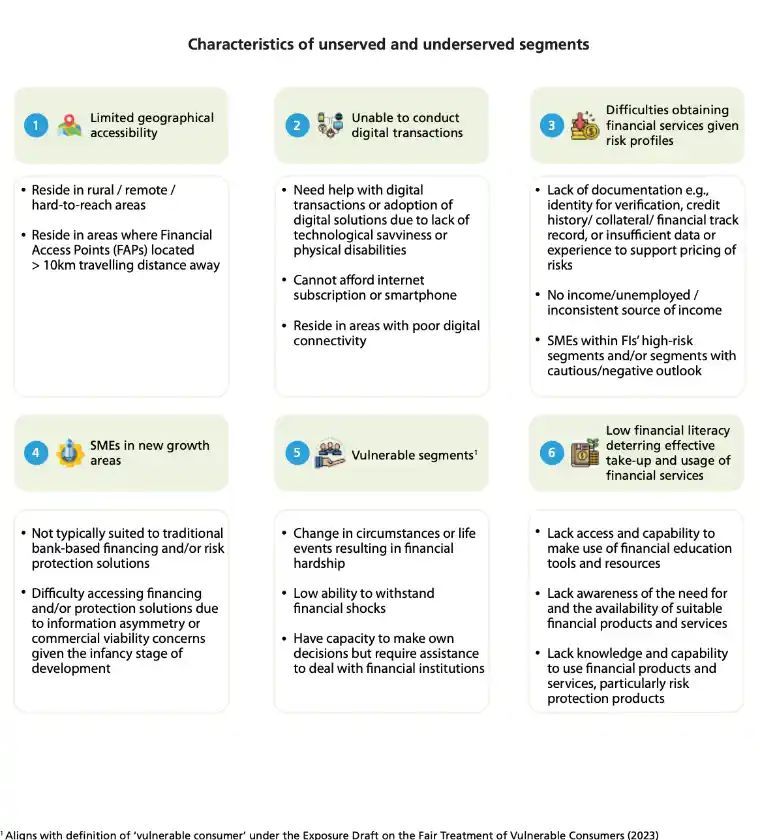
And when farmers turn to banks, they hit a wall because there are no verifiable financial records or operational data for lenders to assess.
For Malaysian smallholder farmers, this is the reality of farming they wake up to every day, and where Kapitani operates, turning farm records into the financial credibility the system needs.
Why Smallholders Are the Hardest Segment to Underwrite
Malaysia’s smallholder farmers make up the majority of the country’s agricultural producers, and most fall under the B40 category. They are the very segment Bank Negara Malaysia’s Financial Inclusion Framework is designed to reach.
The challenge is structural. Without data, credit access remains out of reach. Without credit, there is little incentive to invest in the structured farm management that could generate the data.
In the absence of structured systems, farmers rely heavily on memory and instinct. Planting schedules, input costs, yield figures, and buyer relationships sit in their heads rather than on any record a bank could access.
For Mohd Nazrul Hazeri B Nazirmuddin and Muhammad Iskandar Mohd Lot, the co-founders of Kapitani, the way out was to address the missing data layer first.
From Data Collector to Agri-Fintech in Malaysia
Back in 2019, when Nazrul and Iskandar first sketched out their business idea, the plan was relatively simple. It involved building a place to store the data that the new wave of IoT players entering Malaysian agriculture would generate.
Then a judge at the Malaysian Global Innovation and Creativity Centre (MaGIC) accelerator asked one crucial question. Nazrul shares,
Mohd Nazrul Hazeri B Nazirmuddin
“The idea was just data collection for farmers. Then the MaGIC judge asked us, what do you guys want to do with the data?
The answer became Kapitani’s thesis. To use the farm-level data to construct an alternative credit score, and to use that score to unlock financing for farmers invisible to formal lenders.
The original ambition was to become Malaysia’s first P2P financing platform built on agricultural data. However, because the Securities Commission Malaysia requires a minimum paid-up capital of RM5 million for any registered P2P operator, this posed a significant barrier for an early-stage startup.
Kapitani persevered. If they couldn’t be the lender yet, they could build the layer that any lender would eventually need.
That meant building a digital farm management platform that generates the crucial data in the first place.
myGAP Became The Pull Factor
Building the platform was one challenge. Getting farmers to use it was another.
Kapitani’s first alpha release saw active usage of 10% to 12%. Even today, with more than 2,700 farmers onboarded, active usage remains modest.
A few factors are at play. Planting tends to be seasonal, and digital literacy among older farmers is limited. And local farming culture, as Iskandar puts it, doesn’t have a norm of recording things by default.
Muhammad Iskandar
“All this happens without a record, as this is recorded through their mind. This is before we intervened in terms of behavioural change.”
This became a turning point. Kapitani began focusing more intentionally on smallholders with a reason to record.
Specifically, farmers seeking certification under myGAP, the Malaysian Good Agricultural Practices standard administered by the Department of Agriculture.
myGAP-certified produce sells at higher prices, and certification requires the kind of farm records Kapitani’s platform is already designed to generate.
The platform became a route to certification, not just another app on a farmer’s phone. The data became a by-product of something the farmer actively wanted.
For the segment Kapitani couldn’t reach through certification incentives, the company built a second, simpler product. Dompetani runs on a WhatsApp-based interface that lets farmers log inputs and activities by snapping photos of receipts and sending voice notes, removing the need to download or learn a separate app. Iskandar shared,
“Everyone has WhatsApp. At least 99% of people are using it. So why not use that system, so that everyone can better digitalise their records?”
While getting the product into the farmers’ hands was one challenge, the next involved scaling Kapitani.
Where the Right Connections Start to Compound
As Kapitani moved from building to scaling, the PayNet Fintech Hub became a key enabler.
Mentors played a critical role in helping the team validate hypotheses before taking them into the field, reducing costly trial and error that typically slow real-world deployment for early agri-fintech players.
At the same time, the Hub’s startup network opened doors to potential collaborators in adjacent verticals for Kapitani, particularly insurance, where meaningful solutions for smallholder farmers facing weather and disaster risks remain limited.
This momentum has also carried into product development, with BayarLaju, Kapitani’s staged agricultural payment platform designed to ease farmers’ cash flow challenges, now selected by Yayasan Hasanah for a pilot.
Even as the commercial pieces came together, a bigger question was emerging on the technology side.
Designing AI Around the Realities of Smallholder Farming
Kapitani’s first product was built before ChatGPT existed. As gen AI took off, the team faced a question: should they rebuild around the new technology, or wait and see how it settled?
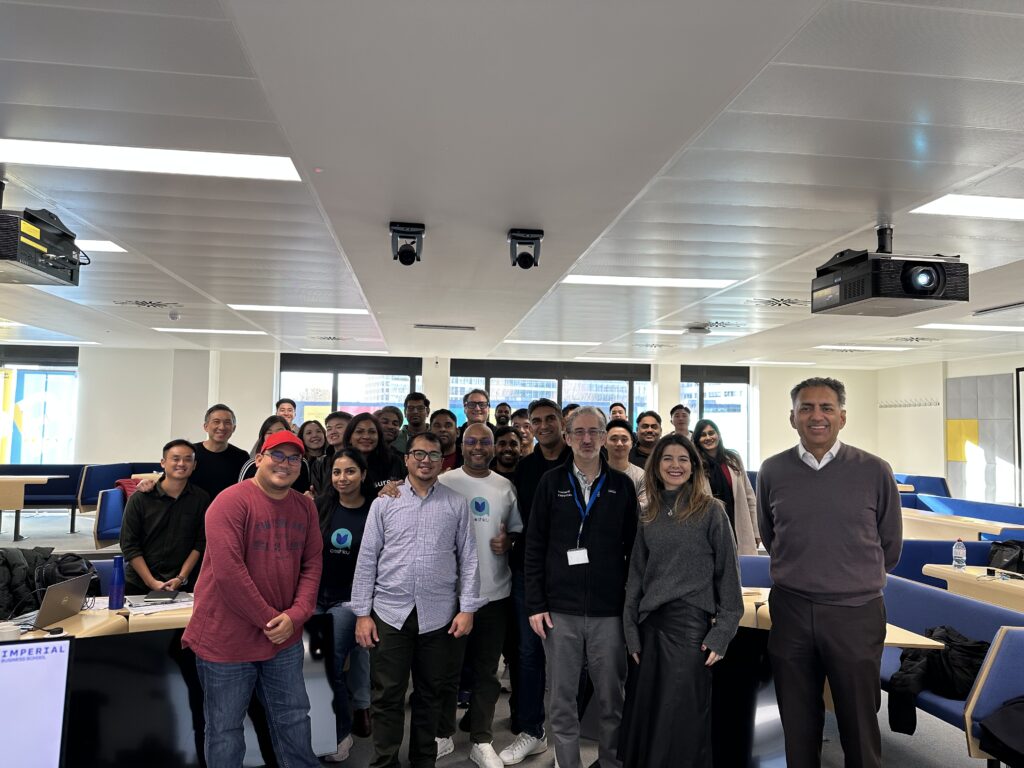
While exploring this, Kapitani was one of the select few chosen for the PayNet x Imperial CATALYST Programme, which helped shape how AI could be meaningfully applied.
“When we got onboarded with the Imperial College programme, we saw a lot of applications that are currently being explored and applied in other parts of the world. In the fintech space, there are a lot of applications that use AI to improve productivity.”
One significant thread came out of the programme.
It involved using AI to crack the onboarding problem at scale: applying system design approaches to the way farmers are introduced to the platform, so that its active usage figure could increase.
What A Day in A Farmer’s Life Looks Like, After Kapitani
The pre-Kapitani version of a smallholder’s day is largely undocumented. Seeds and fertiliser are bought from the shop, planting follows a mental schedule, and the harvest is sold to whichever buyer turns up. None of this activity is captured in a way that a bank can use.
With Kapitani in place, the same day produces a ledger. The farmer snaps a picture of the shop receipt into WhatsApp or the Dompetani app, and the system logs what was bought.
A planting schedule is then set, with reminders for fertilising and harvest. By the end of a planting cycle, the farmer has a record of inputs, costs, yields, buyers, and contact numbers for repeat sales.
Over time, as records accumulate, they begin to form a basic profit-and-loss view, integrated with bank account data that the farmer can also feed into the system. Nazrul adds,
“This farm transactional record provides the credibility. We can also identify whether the farmer has risk mitigation in place, whether they’re planting just chilli or have multiple crops.”
Digitising Compliance for Smallholder Farming at Scale
Nazrul explained that the idea has always been for Kapitani to help empower smallholder farmers, beyond agri-fintech in Malaysia.
“Our end goal is always about empowering smallholder farmers with their data. If we can use their data, we can derive a lot of value from it, whether that’s financing or market access.”
He adds that each country faces its own gaps. In this case, it comes down to empowering farmers through their own data, structured in line with good agricultural practices.
The Good Agricultural Practice framework is guidance set out by the Food and Agriculture Organisation of the United Nations, and each Southeast Asian country has its own equivalent: Indonesia has IndoGAP, while the Philippines has PhilGAP.
None of the major agritech players in the region, by Nazrul’s reading, has built a digital GAP-compliance layer that would let smallholders prove compliance, sell into traceability-mandated markets, and access financing against verified records. Nazrul explains,
“The Good Agricultural Practice is like the halal certification for F&B. Most commodities today only comply with Global GAP, but for farmers, they need to pay RM100,000 to RM200,000. Each ASEAN country has their own GAP, and none of the agritech players in the region are pushing this digital GAP-compliance layer yet.”
That’s the layer Kapitani is building.
The reality is that agri-fintech is a long term game. Customer acquisition is expensive, and behaviour change takes time.
While the platform has always offered a free tier for smallholders, sustainability on Kapitani’s side remains a key question.
That is where its commercial model comes in. As the co-founders explain, they work with corporates and plantation companies who adopt the platform and pay for its use, effectively subsidising access for farmers while keeping the lights on for the bigger pieces to fall into place.
For a sector that has been draining smallholders for decades, this slow and deliberate build may begin to shift value back into the farmer’s hands, at scale and over time.
For fintechs navigating between idea and scale, the PayNet Fintech Hub helps you move faster. Click the banner below to explore how the Hub works and what it has to offer you.
This article is part of an ongoing series spotlighting Malaysian fintechs building the future of finance through the PayNet Fintech Hub. Discover the Hub and more fintech startup journeys from IIMMPACT, InsureKu, Janjilah, CashKu, Swipey, Blox, and Moby.
Featured image edited by Fintech News Malaysia based on image by Kapitani during the Majlis Penutup Hijrah Asnaf Tanaman Tembikai on 23 February 2025 with Agrobank CEO Dato’ Tengku Ahmad Badli Shah Raja Hussin